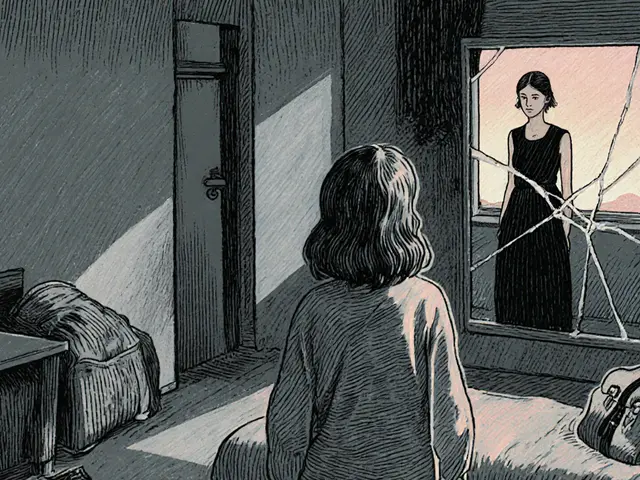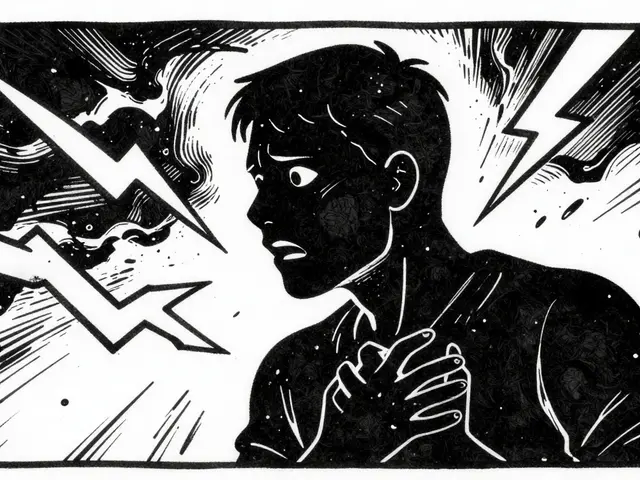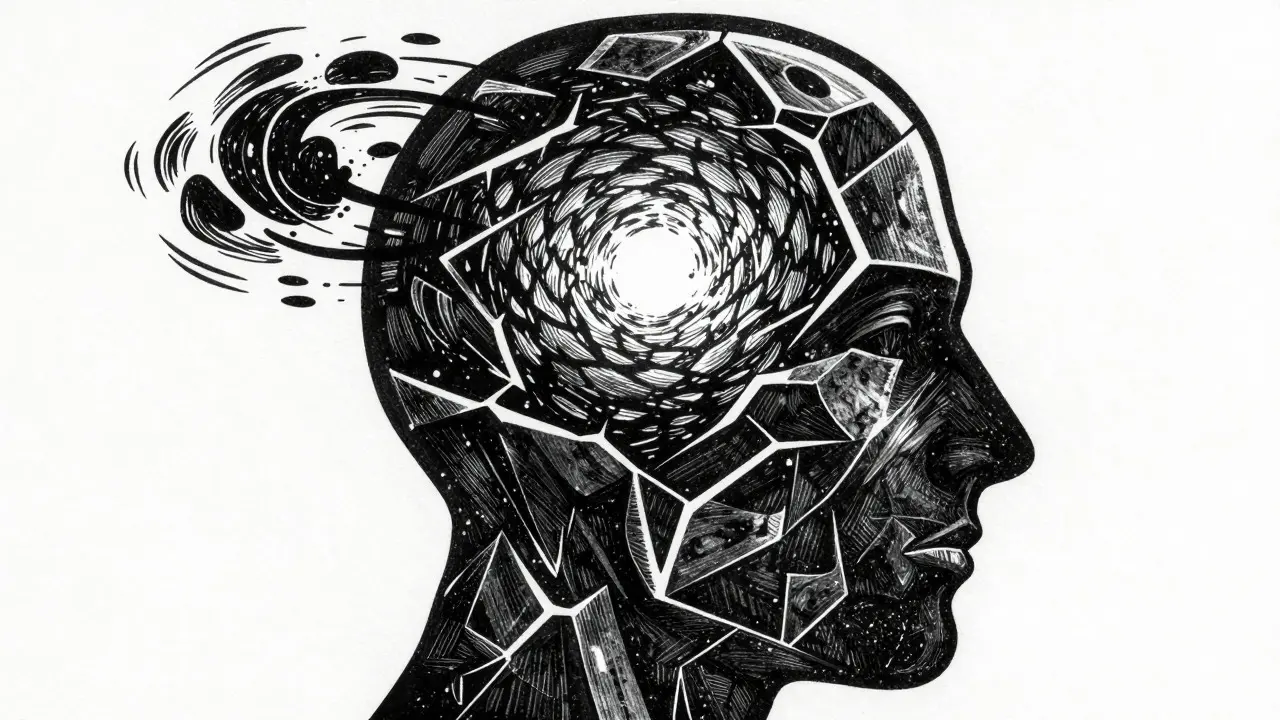
Imagine this: You finish a complex project on time, but your brain immediately whispers, "You only got lucky." Or maybe you miss a deadline by five minutes and think, "I'm just lazy and incompetent." If you have ADHD is a neurodevelopmental disorder characterized by deficits in attention, hyperactivity, and impulsivity, these thoughts might feel like facts. But they are often traps set by kognitivní omyly (cognitive distortions). These mental shortcuts turn minor setbacks into evidence of total failure. The good news? You can rewire these patterns through cognitive restructuring.
This isn't about positive thinking for its own sake. It's about aligning your self-talk with reality. For people with ADHD, the gap between intention and execution is wide due to executive function challenges. When we blame ourselves for that gap, we create a cycle of shame that makes focus even harder. Let's look at how to break that loop.
Proč se u ADHD tvoří tak tvrdá přesvědčení?
ADHD isn't just a focus issue; it's a regulation problem. Your brain struggles with inhibitory control and working memory. This means you might start three tasks, finish none, and end the day feeling paralyzed. Over years, these experiences build up. A child who forgets homework repeatedly hears "you don't care" from teachers. An adult who misses emails hears "you're unprofessional" from colleagues.
These external judgments become internal beliefs. They aren't logical conclusions; they're emotional summaries of painful experiences. Because ADHD symptoms fluctuate based on energy, interest, and stress, your performance looks inconsistent. To your critical inner voice, inconsistency equals unreliability. That's the root of many negative core beliefs in ADHD adults: "I am flawed," or "Nothing I do is enough."
Nejčastější kognitivní zkreslení při ADHD
Not all negative thoughts are equal. Some are more common in ADHD populations because they directly attack the areas where executive functions struggle. Recognizing them is the first step to changing them.
- Black-and-white thinking: Seeing things as either perfect or a disaster. If a presentation has one mistake, it was a total failure. There is no middle ground.
- Catastrophizing: Assuming the worst-case scenario will happen. Missing one meeting means getting fired, losing housing, and ending up homeless.
- Mental filtering: Focusing exclusively on negatives while ignoring positives. You remember every criticism but forget every compliment.
- Labeling: Assigning a global identity to a specific behavior. Instead of "I made a mistake," you say "I am a mistake."
- Should statements: Rigid rules about how life *should* be. "I should always be organized." When reality fails to meet the standard, guilt follows.
These distortions drain mental energy. Since ADHD brains already operate with lower dopamine levels, spending energy on self-criticism leaves less fuel for actual task completion.
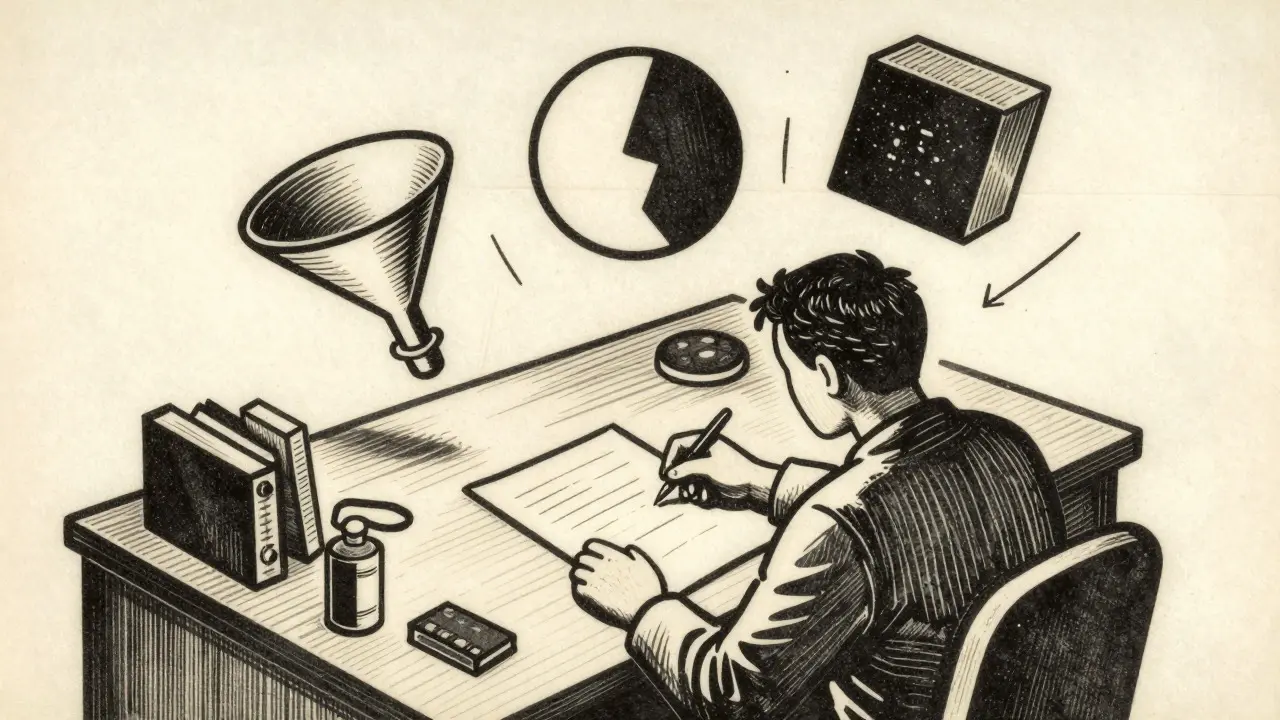
Krok za krokem: Restrukturalizace v praxi
Cognitive restructuring sounds clinical, but the process is surprisingly practical. You don't need to meditate for hours. You need a simple framework to catch a thought and test it against reality.
- Catch the thought: Notice the automatic reaction. Write it down exactly as it appears. Example: "I forgot my keys again. I'm so stupid."
- Identify the distortion: Which type is this? In this case, it's labeling and mental filtering (ignoring that you found them quickly).
- Gather evidence: Ask yourself: What proves I'm stupid? What proves I'm not? List facts. Fact 1: I found the keys in 10 minutes. Fact 2: I've been productive today. Fact 3: Everyone forgets things sometimes.
- Create a balanced thought: Replace the extreme statement with a realistic one. New thought: "I forgot my keys, which is annoying, but I solved it quickly. It doesn't define my intelligence."
- Check the emotion: Did the anxiety or shame decrease? If yes, the new thought resonates with reality. If not, refine it.
The goal isn't to force happiness. It's to reduce the emotional weight of mistakes so they don't paralyze you. A balanced thought allows action. Shame creates freeze.

Praktické nástroje pro každodenní život
You won't always have time for a full worksheet. Here are quick techniques to use when a negative spiral starts.
The 5-4-3-2-1 Grounding Technique: When catastrophizing hits, pull back to the present. Name 5 things you see, 4 you hear, 3 you touch, 2 you smell, 1 you taste. This interrupts the mental loop and engages sensory processing, which helps reset the prefrontal cortex.
The "Friend Test": Would you say this harsh thing to a friend with ADHD? Probably not. You'd say, "Hey, you're tired, let's take a break." Give yourself that same grace. Self-compassion isn't coddling; it's accurate perspective.
Visual Cues: Keep a sticky note on your monitor that says "Evidence, not Emotion." When you catch yourself judging, look at the note. It prompts you to switch from feeling mode to fact-checking mode.
Body Doubling: Sometimes the best way to counter the belief "I can't do this alone" is to work alongside someone else. Body doubling reduces the perceived difficulty of tasks and provides external accountability without judgment.
Příběhy změny: Od zoufalství k akci
Consider Mark, a 34-year-old software developer. His core belief was "I am unreliable." Every missed sprint deadline reinforced this. He started using the evidence-gathering method. After missing a deadline, he listed: "Client accepted the late delivery," "No penalty incurred," "Team covered the gap." Over three months, his self-rating of reliability went from 2/10 to 7/10. Not because his punctuality magically improved, but because his interpretation of events became fairer.
Or Sarah, a marketing manager. She struggled with black-and-white thinking regarding her creative ideas. If an idea wasn't approved immediately, she discarded it as "bad." By applying the "balanced thought