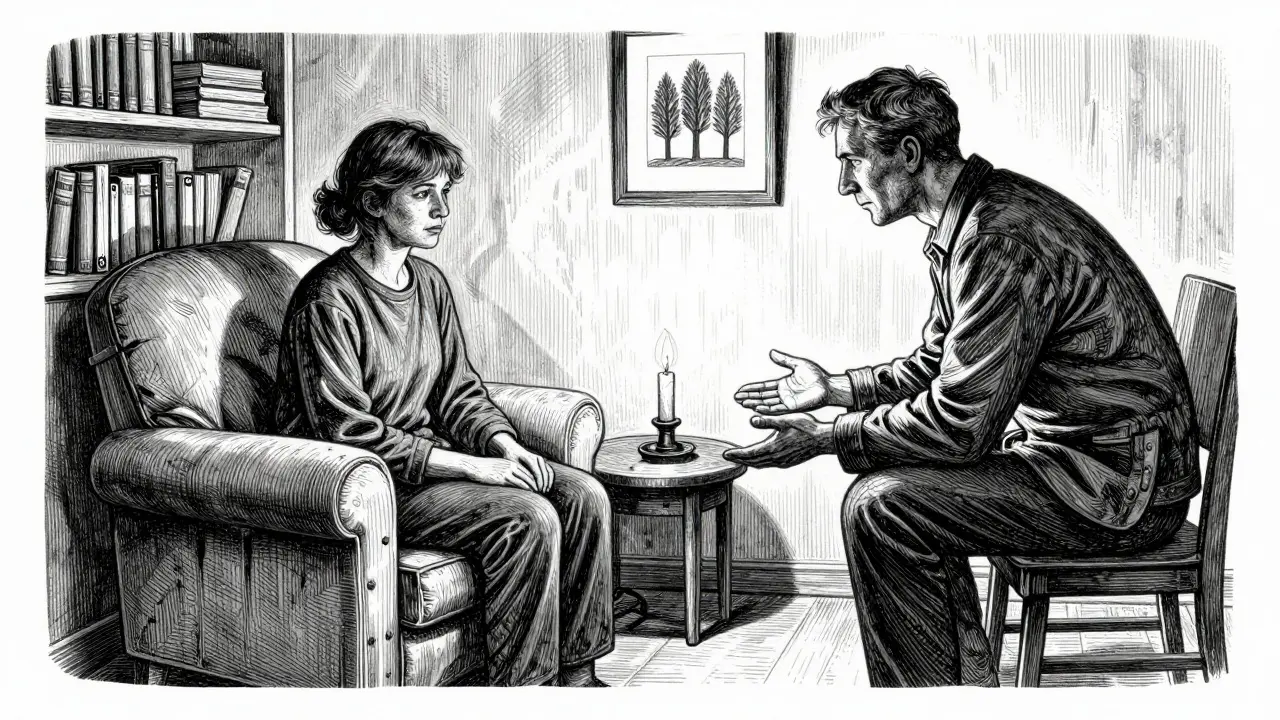
Terapeut ptá: Jak najít správného odborníka pro psychoterapii
When you're looking for help with anxiety, relationship problems, or just feeling stuck, the right terapeut ptá, osoba, která vás v psychoterapii vede k lepšímu porozumění sobě a svým reakcím. Also known as psychoterapeut, it’s not just someone who listens — it’s someone who helps you rebuild your inner compass. Many people think any therapist will do, but that’s like saying any mechanic can fix your car — even if they’ve never seen your model. In the Czech Republic, over 28% of therapists use solution-focused methods, and many more specialize in trauma, couples work, or ADHD. The right fit isn’t about credentials alone — it’s about chemistry, clarity, and consistency.
Good therapy doesn’t start with a diagnosis. It starts with a feeling: "This person gets me." That’s why terapeutický vztah, důvěra a bezpečí, které vznikají mezi klientem a terapeutem během sezení matters more than the method. A therapist might use CBT, EMDR, or family systems, but if you leave every session feeling judged, unheard, or confused, it won’t work. Look for someone who asks questions instead of giving advice, who normalizes your feelings instead of pathologizing them, and who doesn’t push you faster than you’re ready. In Czech practice, many therapists offer sliding scale fees — so cost doesn’t have to be a barrier. But don’t let price be your only filter. A cheaper therapist who doesn’t connect with you costs more in time and pain.
You don’t need to know the difference between gestalt and systemic therapy to find the right person. What you do need is to notice how you feel when you talk to them. Do they interrupt? Do they seem rushed? Do they make you feel like a case file? Or do they pause, reflect, and let silence breathe? These small things — active listening, clear boundaries, respect for your pace — are the real signs of quality. And if you’ve tried therapy before and it didn’t help? That’s not your fault. It just means you haven’t found the right fit yet. In the Czech Republic, thousands of people switch therapists every year — and most find better results after the second or third try.
Below you’ll find real stories and practical guides from people who’ve been there: how to write your first email to a therapist, what to ask during the initial call, how to recognize when it’s time to switch, and how to spot ethical red flags. You’ll also learn about tools like sliding scale fees, online therapy for expats, and what to do if you feel therapy is moving too fast. These aren’t theoretical ideas — they’re lived experiences from people who needed help and found it, often after several false starts. The right therapist isn’t magic. But they do make the difference between surviving and starting to live again.